
September 06, 2026
Zygo Z2 Review: Do Bone Conduction Swim Headphones Actually Work?
Zygo Z2 Review: Do Bone Conduction Swim Headphones Actually Work?
Anyone who's spent an hour staring at a black line on the pool floor knows why swimmers get bored faster than runners or cyclists do. There's no scenery, no conversation, and until fairly recently, no music, since regular headphones and Bluetooth don't function underwater. Zygo built its whole business around that gap, and the Z2 is its current flagship headset.
I looked into how it actually works, what comes in the box, and whether $329 is a fair price for it.
The Problem Zygo Is Actually Solving
Bluetooth doesn't travel well through water. That's why most "waterproof" swim headphones on the market are really MP3 players in disguise: you load songs onto them ahead of time, and you're stuck with that playlist once you're in the pool. No streaming, no podcasts, no changing your mind mid-lap.
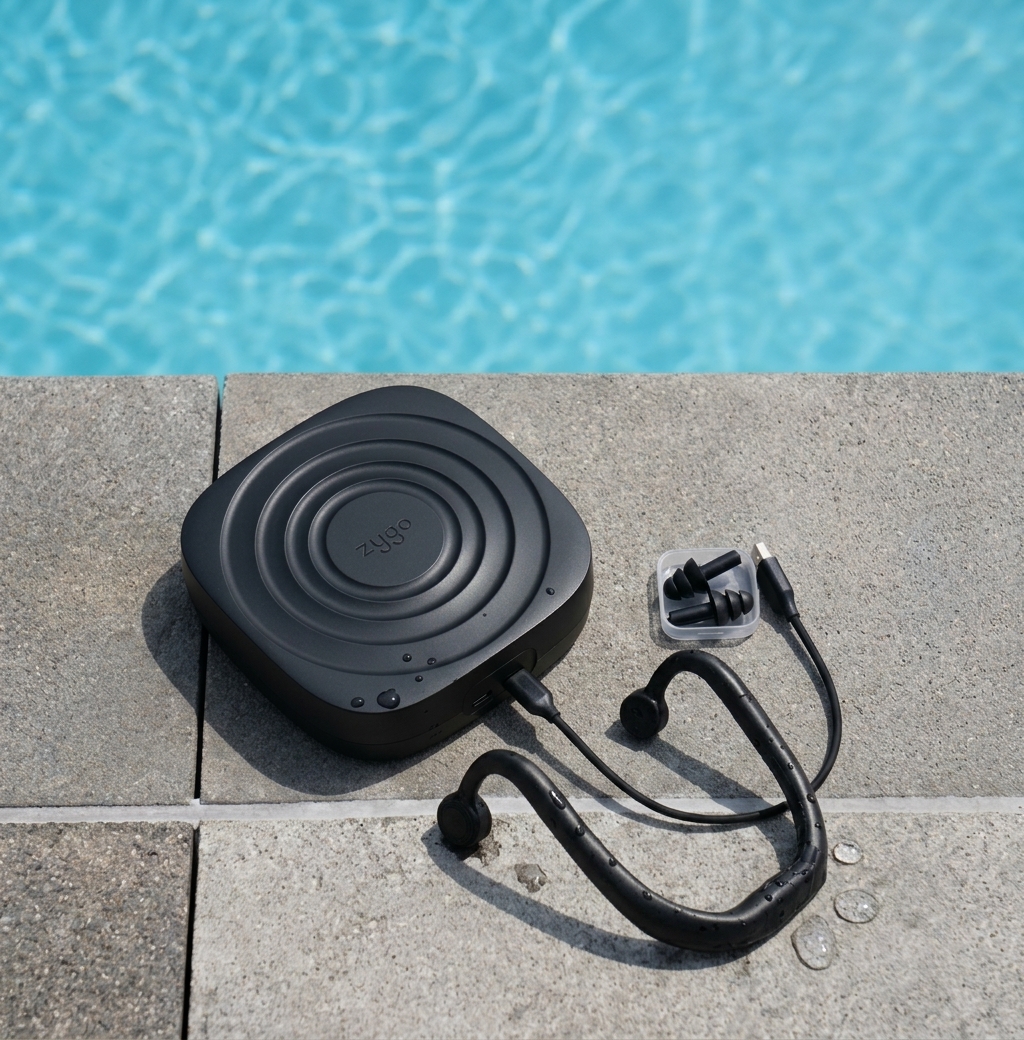
Zygo takes a different route. The headset pairs with a small case that sits poolside, and that case converts your phone's Bluetooth signal into a radio frequency that can pass through water. Zygo says it holds three patents on that conversion process. The result is that you can stream Spotify, a podcast, or an audiobook from your phone in real time, the same way you would on land, minus the part where your phone actually goes in the water.
What's in the Box
● The headset, which also tracks lap counts
● A charging case that doubles as the transmitter
● A pair of earplugs
● A USB-C cable
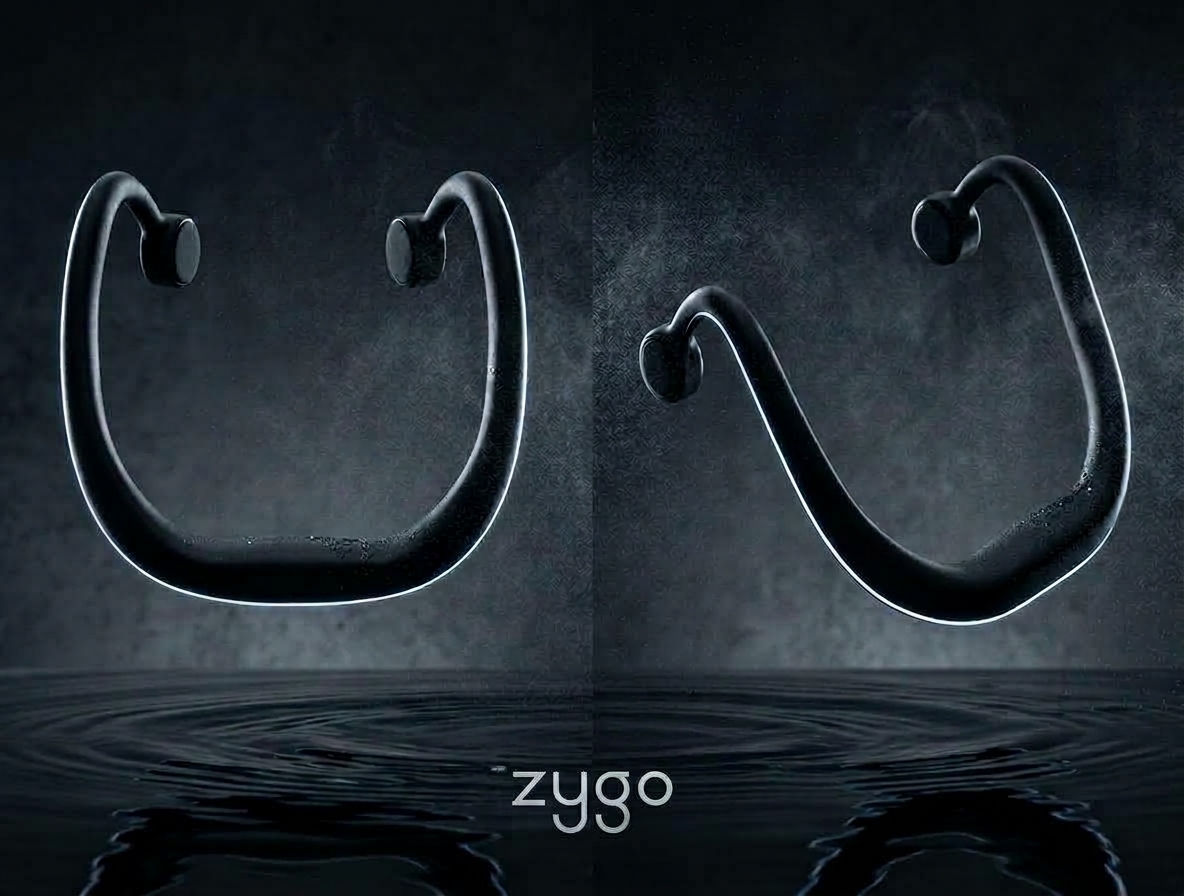
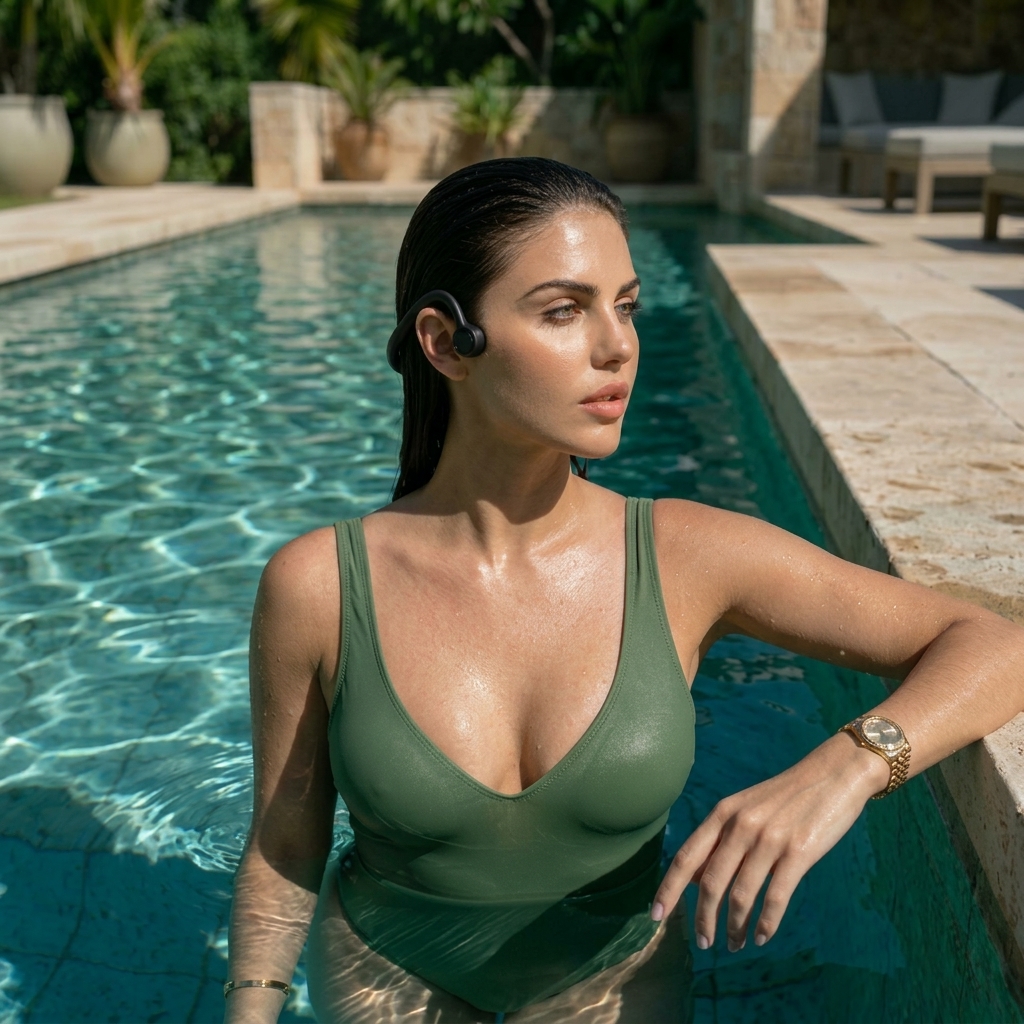
The headset uses bone conduction, so sound reaches your inner ear via vibrations against your skull rather than through an earbud seal. That's part of why it can be worn over or under a swim cap without much fuss.
Setting It Up and Using It
Setup is a few minutes. You power on the headset and the case. Find “Zygo” in your phone’s Bluetooth menu. Flip up the case’s antenna, then power it on. Zygo suggests leaving the case on something high by the pool, like a chair or a ledge, as height makes a big difference to range. You can leave your phone itself as far 30 feet from the case.
Range depends a lot on the water. In a chlorinated pool, at roughly 2 feet below the surface, Zygo lists the range at about 50 meters. Salt water cuts into that, and so does depth: the deeper you swim, the weaker the signal gets.
Battery life is 2 to 3 hours per charge on the headset, less at higher volumes. One charge of the case should see you through several sessions as it can top up the headset around 7 times before it itself needs a top-up. The app shows the battery levels of both.
One thing worth flagging: flip turns used to cut off audio on older bone-conduction headsets. Zygo built in a short buffer, about 3 seconds, the first time you hit play, meant to smooth over that gap during a flip turn. Touch turns aren't handled quite as reliably yet, according to Zygo's own FAQ.
What You Get Free vs. What Needs a Subscription
Realtime Lap Counting is free. The rest of the app is behind a paid subscription and offers 500+ guided workouts, a tempo trainer, a leaderboard, saved swim history and a one-way walkie-talkie feature. It’s worth knowing going in, because a good chunk of what appears in Zygo’s marketing lives inside that paid tier rather than the base purchase.
Who Should Really Buy This
This isn’t an impulse buy at $329 and it’s for a specific swimmer: someone who does regular lap workouts and finds pool time repetitive rather than relaxing. And Zygo’s own customer reviews touch on that very grievance, with swimsuits reporting they’d end their sessions early or bail altogether because it was boring, then began showing up more frequently when music or podcasts were added into the mix.
If you are swimming sporadically or mainly open water without a structured routine, especially with a subscription on top for the full app experience, then the price is a little harder to justify. The clearer audience is triathletes and lap swimsuits who swim consistently.
Price, Warranty & Returns
The Z2 is priced at $329 in either the Standard or Large size. Zygo backs it with a 30-day money-back guarantee and a one-year warranty from the date of delivery, with an extra $69 for a second year. It’s also eligible for HSA or FSA payment through a partner called Gale — which is relevant if a doctor or physical therapist recommended swimming as part of your routine.
Shipping is free within the continental US. Hawaii and Alaska cost more, and international shipping isn't available yet. Zygo says that's a limitation of being a small company for now, with plans to expand eventually.
The Bottom Line
Zygo isn’t trying to sell low-cost gadgets. What it’s really trying to do is solve a real technical problem: getting live audio through water, which most of its competitors dodge by selling offline MP3 players. It’s more expensive and the app does require a subscription to unlock all of its features. That’s probably a fair trade for someone who swims several times a week and finds silence is the main thing keeping workouts short. It’s a tougher call for casual swimsuits.